|
Memories
of Libya
1956 to 1959
Contributed
by Trevor STUBBERFIELD 52A
Libyan Extras Continued.
|
|
|
|
|
|
|
|
|
|
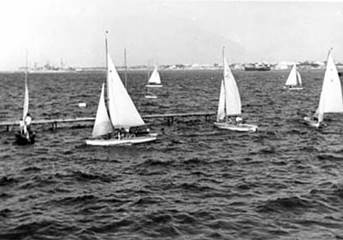
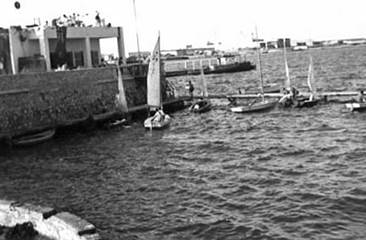
The Dolphin Yacht Club, run by the
services for the services, based on Tripoli
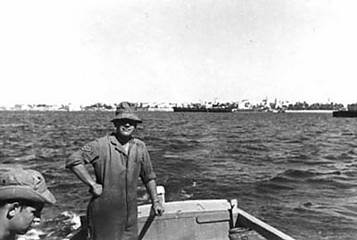
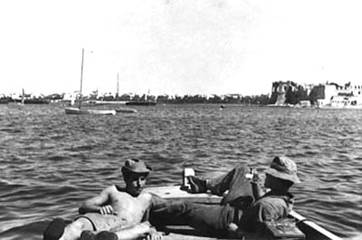
harbour. I was very surprised to find that I had volunteered to fit a new power unit to the club rescue launch.
After several attempts to repair the original engine it was decided to fit
a new one which had been won from
an unnamed Ordnance Depot. It was the whole unit from a pickup truck. Much
longer than the original, it became a knife and fork job to fit it. I volunteered a couple of lads as
fitter’s mates. Much of the work was done in the afternoons, bent over the
engine locker, under the hot sun. That was my excuse when I was sea-sick,
on a mill pond sea, tied up to the jetty. It all went fairly well, up to
the first sea trials that is. The engine had been given a good run up and
we cast off, put it in first gear and let the clutch in. We quickly found
we had four reverse gears and one forward as we crashed stern first into
the jetty. The original set up had been just a simple gear train, but now
we had the extra shaft and gears in the truck gearbox. The problem was
solved by the club having a new propeller cast with reverse pitch.
The next trials didn’t fare much better.
Confident we would go forward, we cast off, the engine was gunned and we
went forward quite quickly, coming to a sharp stop. One crew member had
untied the rear rope but left it on the jetty as he jumped on board the
moving launch. The rope dropped between the slats of the jetty and wrapped
around one of the legs. We stopped suddenly and then went forward again,
tugging the jetty along the bed of the harbour. The Club Commodore was not
best pleased. That should have been the end of my career as a skipper but
strangely we ended up as the crew of the launch which had to be available
at all times whilst the yachts were sailing. There were several mishaps
before we got the hang of seamanship, including running out of fuel twice
in the middle of the harbour. The first time we were towed back by the
harbourmaster’s launch which didn’t please the Commodore when he got the
bill. Second time we had taken the precaution of shipping a pair of oars
and had to row back. It must have been one of very few launches where you
actually drove it like a car, using the clutch with a lever and changing
gear.
My Master’s ticket was revoked by my wife
who had arrived from the UK.
She wasn’t best pleased when she found out I was spending my afternoons
hauling scantily clad, nubile young maidens out of the drink and sitting
them in the boat whilst we righted their yachts. And all before the
invention of the wet T shirt contest. I never liked boats anyway.
|
|
|
|
|
|
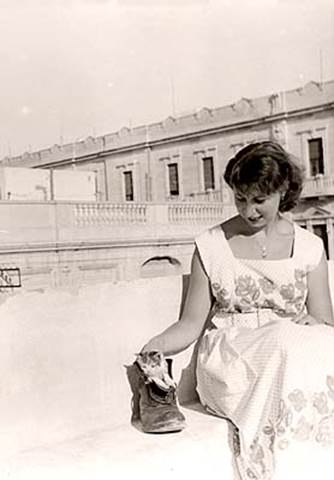
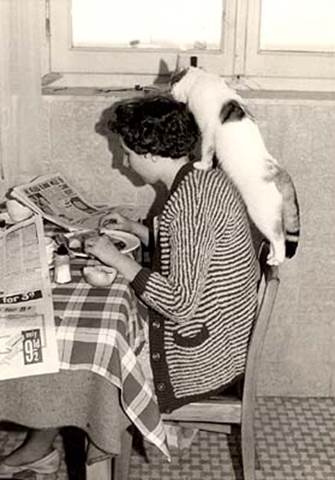
I was called to clear away the body of a
dead cat and her kittens from the cab of a truck where she had got trapped.
One of the kits had the faintest signs of life and I rushed her home where
we mounted a 24 hour vigil to try and save her. We were rewarded with a
most remarkable cat who won us over. Fairly tame with us, she carried all
the traits of a wild cat, which her mother was. Very eerie to be woken in
the middle of the night by a howling banshee, only to find out it was the
cat howling to the moon. She would think nothing of running up behind you
and burying her claws and teeth into the back of your bare leg, probably
practising her hunting skills. On our next posting she was flown to Germany
to await our arrival, spending her time in a cattery where she caused quite
a lot of havoc with the other inmates. In the end she was taken into the
house away from the other cats to give them some peace. Finding out what
regulations were involved in exporting her to Germany found me in a rather
bizarre situation, sitting on a couch, in the German Embassy with the
Ambassador, in his study, drinking coffee and biscuits, whilst his aide
looked up the rules and we talked about the strange Englishman’s obsession
with his cat.
|
|
|
|
|
|
|
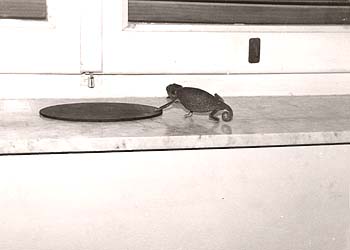
I had a thing about picking up stray
creatures and bringing them home. The odd praying mantis, a lizard or two,
dung beetle, and Horace the chameleon who lived in the spare bedroom. The
cat would often give him a whack at which he would swell up and let out air
with a loud roar. He was so loud on one occasion that the cat shot up the
curtains into the pelmet and wouldn’t come down till Horace was removed
from the room. My biggest find was a jerboa, or desert rat. I got it all
the way home in a cardboard box. When I opened the car door it had eaten
its way out and shot off up the road at a furious pace, startling an Arab
or two.
|
|
|
|
|
|
|
|
|
|
|
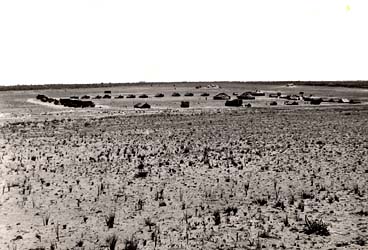
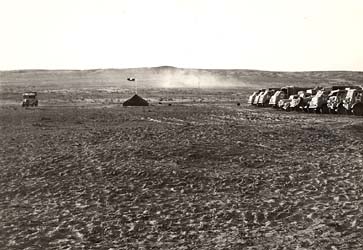
A typical set-up of a desert camp, this
one following a live firing exercise we had done in support of the Libyan
army. RAF Vampire aircraft from Malta, guns from 3 RHA, tanks
from the Queen’s Bays, transport from the RASC, spotter aircraft from the
Air OP, and signals communication from the Royal Signals. The target was a
building at one end of a long valley. We were parked up out of the way on
the top of the hillside, looking down into the target area. It was a
fantastic sight, looking down onto the Vampires as they flew in low and
released their rockets, pulling up and away immediately to avoid shooting themselves
down with their own weapons as they ignited and quickly reached speeds in
excess of the planes own speed. The building was pounded by the artillery
and tanks which were out of sight, lobbing shells over the hillside into
the valley. The ground attack followed, carried out by the Libyan infantry
advancing with fire down the valley. Some of them got it wrong, they stood
up as the troops behind them fired. There were several serious casualties
who were evacuated pretty smartly by the RASC ambulances, on stand by for
just such an occurrence.
At the end of the exercise we were
rewarded with the gift of two sheep which were slaughtered and ended up as
mutton stew for our main meal. Within a very short time about eighty per
cent of the camp had made for the thunderboxes, which quickly became fully subscribed. The
dreaded Tripoli Trots had struck with a vengeance. We didn’t have enough
fit personnel left to get all our equipment back to base, most had been
evacuated back to town by ambulance.
Training of the Libyan Army was
undertaken by the British Army through the setting up of a Military Mission
in 1951. Soldier Magazine published an article on the training program that
was put in place, and the report can be accessed from the first link.
The second article reports on the early
days of the Army Air Corps in Libya,
the Corps having taken over the duties of the Royal Artillery Air OP unit
based at Idris
Airport.
Click on each Soldier Magazine front page
to access the articles.
|
|
Military Mission to Libya.
|
Focus on Libya.
|
|
|
|
|
|
|
These articles remain
the Copyright © of Soldier Magazine.
|
|
|
|
|
|
Adobe Reader is
required to open these file and can be downloaded from this link if needed.

|
|
|
|
|
|
|
|
|
|
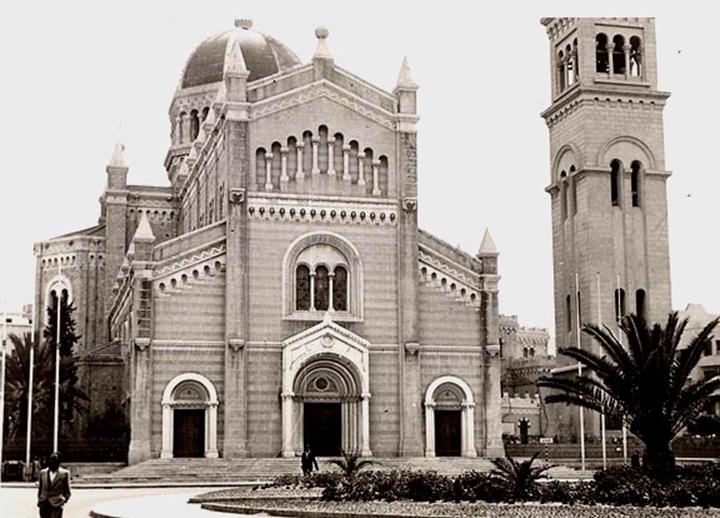
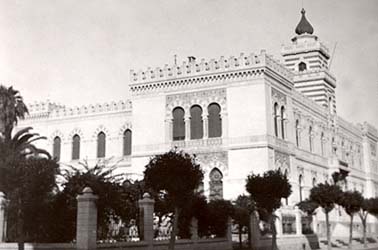
The Italian Roman
Catholic Cathedral in 1957 before it was converted to a mosque.
|
|
|
|
|
Barclays Bank, Tripoli.
|
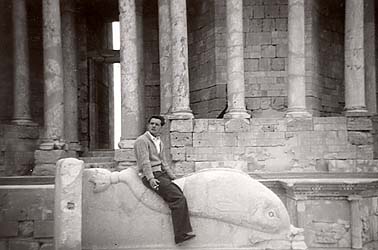
Riding the dolphin at Sabratha.
|
|
|
|
|
|
|
|
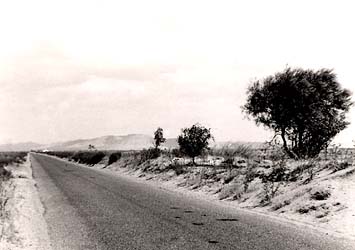
The dead straight road
across the Azizia Plain.
|
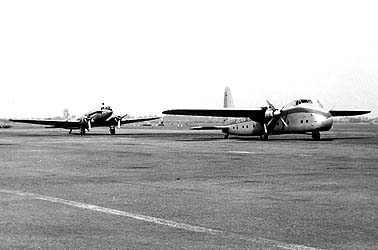
Silver City car freighter at Idris airport.
|
|
|
|
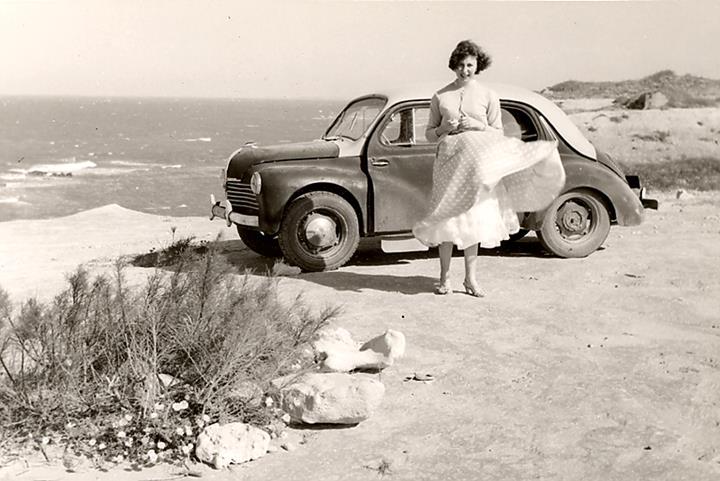
We needed a vehicle of our own to get
about town, to work and to the beaches. This was found unloved and unwanted
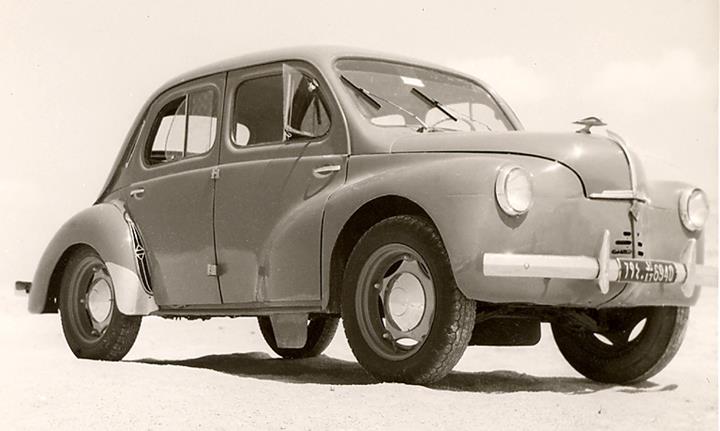
(the car that is) tucked away in the back of a garage. Sufficient piastres changed hands and we owned a 1947 Renault 4CV
750cc rear engined nightmare. In the long run I
spent more time with my head under the rear engine cover than I did driving
it, but give it it’s due, it taught me a lot of practical engineering
skills backed up by the theory learnt at Arborfield.
|
|
|
|
|
|
In modern parlance, my ride was pimped, and after a tidy up and a new paint job it
began to look a lot smarter. I had a stroke of luck when I got involved
with the film Ice Cold in Alex, as reported on elsewhere. I was given an
old chassis of a Fiat pick-up truck with the instructions to construct a
metal frame on it which would look spectacular when it was blown up, bits
to be seen flying everywhere. In theory and in the film, the vehicle which
was destroyed was a Humber 1 Ton Recce Car, a bit more expensive than an
old Fiat chassis. It was obviously going to be a one take job, no second chance. I noticed that the Fiat had
very good tyres on it and just by chance they were the same size as the
Renault which was not well shod. After a hectic hour or so the position was
reversed and I never did have to buy tyres whilst I had the car.
At the end of my tour of duty I had no
difficulty selling the car. Being quite small it was one of the few models
which could be driven right into the old city and up the narrow alleys and
passageways as I found out when I delivered it to the purchaser for a
preview for his family. At times clearance was about an inch either side
and to open the door to get out I had to find a spot where two alleyways
crossed. I was very relieved when I got back out to the modern city with
its wide avenues and boulevards.
|
|
|
|
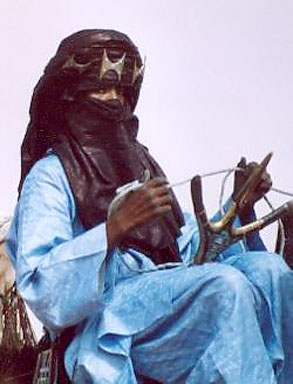
Tuareg tribesman in light blue
robes.
|
Published:
15th February 2008.
Latest
Update: 4th July 2011
  Libyan Extras Continued. Libyan Extras Continued.
|

